
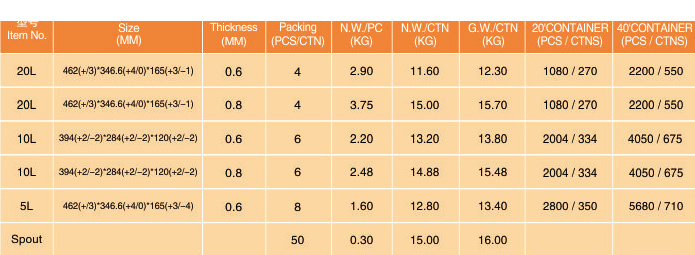
Fuel canister 20L
· About this product
Product Consultation:
keyword:
Inventory
Model Number:
重量
隐藏域元素占位
上一页

Product Introduction
Title: The Gasoline Can: A Practical Companion for Fueling Our Lives
Introduction
In our modern world, gasoline plays a crucial role in powering vehicles, machinery, and various devices. However, the efficient and safe storage and transportation of gasoline are equally important. This is where the gasoline can, a seemingly simple yet essential tool, comes into play. In this article, we will explore the history, design, safety features, and various uses of gasoline cans, highlighting their importance in our daily lives.
History of the Gasoline Can
The gasoline can has evolved significantly since its inception. The first gasoline cans were made of metal and had a simple design. They were primarily used during World War I to transport fuel for military vehicles. As the automobile industry grew in the early 20th century, so did the need for safe and efficient fuel storage. Manufacturers began to innovate, leading to the introduction of more sophisticated designs, including features such as spouts and handles for easier pouring.
By the mid-20th century, plastic gasoline cans became popular due to their lightweight nature and resistance to corrosion. Today, gasoline cans are made from various materials, including high-density polyethylene and metal, offering different advantages depending on their intended use.
Design and Features
Modern gasoline cans come in various shapes and sizes, catering to a wide range of needs. The design of a gasoline can typically includes a sturdy body, a secure lid, and a pouring spout. Some cans even feature a built-in handle for easy carrying.
One of the key aspects of gasoline can design is safety. Most gasoline cans are equipped with child-resistant caps to prevent accidental openings. Additionally, many cans have ventilation systems that allow air to escape while pouring, reducing the risk of spills and splashes. Some models also feature flame arresters to prevent ignition in case of a fire.
The size of gasoline cans can vary from small, portable containers holding a gallon or two, to larger cans that can hold five gallons or more. This versatility allows users to choose the right can for their specific needs, whether they are filling up a lawnmower, a generator, or a vehicle.
Safety Considerations
While gasoline cans are essential for fuel storage, they also pose certain risks if not handled properly. Gasoline is highly flammable, and improper storage or usage can lead to accidents. Therefore, it is crucial to follow safety guidelines when using gasoline cans.
First and foremost, always store gasoline cans in a cool, dry place away from direct sunlight and heat sources. This reduces the risk of the can expanding or leaking. Additionally, it is important to ensure that the can is properly sealed to prevent fumes from escaping.
When pouring gasoline, take care to avoid spills. Using a can with a spout can help control the flow of fuel, minimizing the risk of accidents. It is also advisable to wear gloves and safety goggles to protect yourself from potential splashes.
Furthermore, never use gasoline as a cleaning agent or in any way other than its intended purpose. This not only ensures your safety but also helps protect the environment from potential contamination.
Uses of Gasoline Cans
Gasoline cans are incredibly versatile and serve a variety of purposes beyond just fueling vehicles. They are commonly used for:
1. **Lawn and Garden Equipment**: Many homeowners use gasoline cans to store fuel for lawnmowers, trimmers, and other gardening tools. This allows for easy refueling without the need to visit a gas station.
2. **Generators**: In areas prone to power outages, gasoline cans are essential for storing fuel for generators. This ensures that families have a reliable source of power during emergencies.
3. **Camping and Outdoor Activities**: Outdoor enthusiasts often use gasoline cans to transport fuel for camping stoves or lanterns. This makes it easy to enjoy the great outdoors without worrying about running out of fuel.
4. **DIY Projects**: For those who enjoy DIY projects, gasoline cans can be used to store fuel for tools like chainsaws or wood chippers. This allows for efficient work without frequent trips to the gas station.
Conclusion
In conclusion, the gasoline can may seem like a simple object, but its significance cannot be understated. From its historical evolution to modern safety features, the gasoline can plays a vital role in our daily lives. By understanding its design, safety considerations, and various uses, we can appreciate this practical companion that fuels our activities. Whether for gardening, emergency preparedness, or outdoor adventures, the gasoline can remains an indispensable tool in our ever-evolving world.
Previous
Related products

40 years of focus on high-quality gasoline tank manufacturing experts - safe storage and transportation, customized selection, control of energy
The gasoline can is an essential tool for many people, especially those who engage in activities such as lawn care, boating, and automotive maintenance.
In our modern world, gasoline plays a crucial role in powering vehicles, machinery, and various devices. However, the efficient and safe storage and transportation of gasoline are equally important.
Gasoline cans, often overlooked in discussions about fuel storage, play a crucial role in various applications, from household needs to industrial operations.
Kütusepaak on auto üks olulisemaid komponente, mille ülesanne on salvestada ja tarnida kütust mootori tööks.
In the world of fluid dynamics and material handling, the pouring nozzle, commonly referred to as a spout, plays a pivotal role in the efficient transfer of liquids and granular materials.
The pouring nozzle, commonly referred to as a spout, is a fundamental component in various containers and vessels designed for liquid dispensing.
Kütusepaagid, nagu 10-liitrised ja 20-liitrised variandid, mängivad olulist rolli kütuse transportimisel ja salvestamisel.
Bensiinitank on üks olulisemaid tarvikuid, mida iga auto- või mootorrattahuviline peaks omama.
Kütusepaak on üks olulisemaid komponente, mis on seotud meie igapäevase elu ja transportimisega.
Dongjie brand gasoline cans are one of the premium products of our company's professional factory.
We look forward to hearing from you
With technological innovation as the core and quality management as the foundation, we are committed to providing customers with high-quality products and services
Subscribe For Offers! Stay Updated WithThe Latest Deals And Updates.
Headquarters Address: No. 16, Pingshan Private Industrial Park, Huashan Town, Huadu District, Guangzhou City
Factory Address: No. 12 Xinghua Road, Tanbu Town, Huadu District, Guangzhou City